
The best content in Malaysia today sits at the intersection of three things: human value, local relevance, and modern content systems.
You know, writing “good content” in Malaysia used to be fairly straightforward. You picked a topic, wrote clearly, added a few keywords, and then it would naturally rank.
That approach no longer works, at least not with the lovely core updates.
In 2026, Malaysian audiences are more selective, more mobile-driven, and far more exposed to low-quality AI content than ever before.
So what does that mean for you? Well, let the best content marketing agency in Malaysia explain how to write content that Malaysians actually want to read, trust, and share, while naturally earning visibility across search, AI, and social platforms.
Why Writing “Good Content” in Malaysia Is Harder Than It Looks
Writing content today is not difficult because of tools, in fact we have a plethora to choose from.
It is difficult because expectations have changed.
Malaysian readers are:
- More time-poor
- More sceptical
- More exposed to low-quality AI content
- More likely to skim than read
At the same time, platforms now reward clarity, structure, and usefulness over length or cleverness. So no more witty word puns or clever one-liners, although we do miss that era.
This means the bar for “good” content has moved. What worked five years ago often feels bloated, slow, or insincere today, probably all three.
What “The Best Content” Actually Means
Before tactics, we need to reset the definition.
The best content in Malaysia typically shares these traits:
- It gets to the point quickly
Long philosophical intros turn readers away, especially on mobile. - It sounds human, not corporate
Over-polished or generic “Asia market” language reduces trust. - It respects local nuance
Laws, pricing, habits, and cultural expectations are referenced naturally, not explained from scratch. - It solves the reader’s problem
Readers should feel helped, not marketed to.
If your content does these well, optimisation becomes easier. If it does not, optimisation becomes pointless.
Start With the Reader’s Question, Not Your Keywords
Strong content almost always begins with a question someone is asking.
In practice, this means:
- The main answer appears early
- Supporting details come later
- The reader does not need to scroll to feel progress
This is not about gaming AI summaries. It is about respecting attention.
Notice how news websites like The Star, FMT or Malaymail often used the inverted pyramid format.
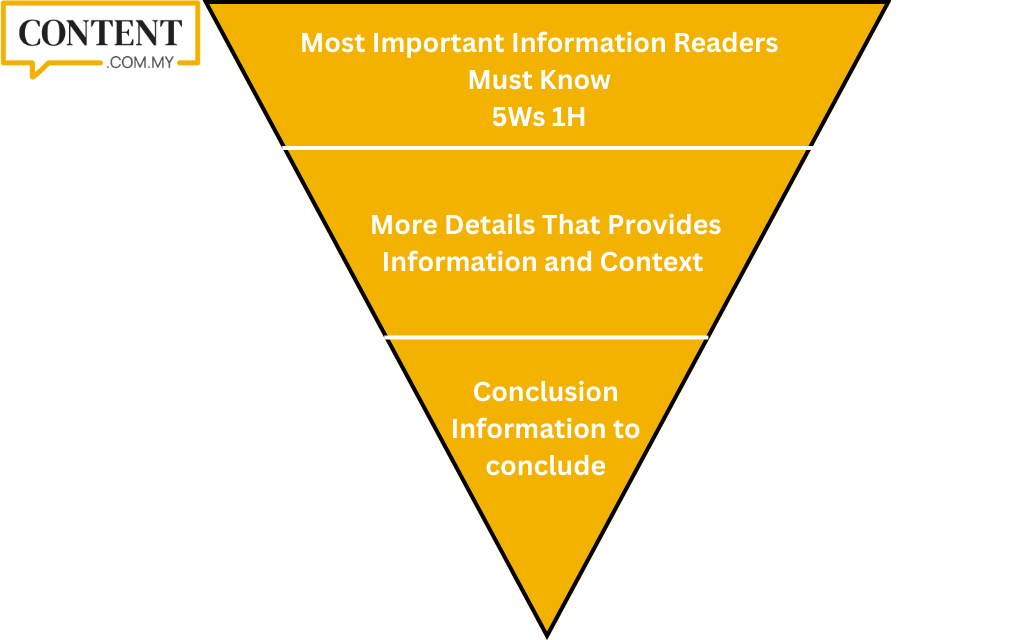
- Who, What, Where, Why, When and How is relevant to the topic
- Additional info that acts as supplementary info to users
- Conclusion that summarize the key points and CTA
When readers feel understood quickly, they stay longer, trust more, and share more.
Please Use AI for Structure, Not for Voice
AI tools are extremely useful for:
- Research
- Structuring outlines
- Spotting content gaps
- Generating first drafts
They are far less reliable for:
- Tone
- Judgment
- Cultural sensitivity (no 3Rs)
- Prioritisation
What you want is this:
AI helps you move faster → Humans decide what matters → Editing focuses on value
If content sounds like it could apply to any country, it usually will not perform well in Malaysia. In fact, that is a tell-tale sign it is written by AI.
An Example
Imagine an AI-generated article titled “How Small Businesses Can Improve Cash Flow”.
On paper, it looks correct. It talks about:
- Improving invoicing
- Reducing expenses
- Optimising payment terms
- Leveraging digital tools
The problem is that nothing in the article feels like it’s written for cash-strapped SMEs in Malaysia.
It does not mention:
- Delayed payments from local SMEs or government-linked clients
- Common 30–90 day payment cycles
- Reconciling SST, e-Invoicing, or bank processing delays
- LHDN knocking on the doors
- How business owners often manage cash flow manually using WhatsApp, Excel, or basic accounting tools like SQL
A Malaysian reader skims it and thinks, “This sounds right, but it’s not written for me.”
Now compare that with a human-edited version that adds small but specific context:
- Acknowledging that many SMEs still chase payments via WhatsApp
- Referencing SST filing cycles that strain short-term cash
- Mentioning how public sector payment timelines affect planning
- Using familiar language rather than textbook finance terms
Nothing dramatic changes structurally, but trust increases immediately.
“National data shows that less than a third of SMEs even maintain a website or advanced digital presence. This gap highlights that when Malaysian business owners do search for online help, they prioritise practical, locally relevant guidance over generic global content.”
Localisation Is More Than Language
One of the more common patterns we see is an attempt to “sound local” by forcing slang into the content.
You have probably seen it before.
Suddenly every paragraph has a “fuiyo”, “can or not”, or “you go where ah?”, even when the topic is about accounting, compliance, or enterprise software.
It is usually done by international brands, but local companies are guilty of this too.
While this can feel endearing at first, it often comes across as performative, or worse, stereotyping.
“Malaysian readers do not need to be reminded they are Malaysian. They want content that understands how things actually work here.” – Keith, Head of Content
What Actual Localisation Looks Like
Localising content is not about sprinkling Bahasa Malaysia keywords or translating headings word-for-word and calling it a day.
Effective localisation shows up in more practical ways:
- Referencing Malaysian systems, regulations, and institutions naturally (LHDN, MFRS)
- Using examples that feel familiar without being exaggerated
- Avoiding foreign assumptions about pricing, timelines, or how decisions are made
In fact, you can write entirely in English and still sound unmistakably Malaysian if the context is right.
Why Forced “Local Flavour” Fails
Overusing slang often means that the content writer understands the language, but not the environment.
A sentence like:
“Walao eh, SME owner sure headache one when cash flow slow slow”
That may get a smile and Uncle Roger would be proud, but it does not build trust with your readers.
Compare that with:
“Many SME owners already expect 30 to 60 day payment cycles, so cash flow pressure tends to show up before it becomes a crisis.”
The second feels local without trying to be funny and it also respects the reader’s intelligence and experience.
Write for Mobile First, Always
Malaysia is not just mobile-friendly, it is overwhelmingly mobile-first.
“More than 95% of Malaysians access the internet via smartphones, and mobile broadband penetration exceeds fixed broadband by a wide margin.” – MCMC Internet Users Survey
For many users, especially SME owners and operators, the phone is not a secondary device. It is the primary one.
And this has real implications for how content is consumed.
Most readers are:
- Scrolling between tasks
- Reading while commuting or waiting
- Skimming instead of deep reading
- Switching apps frequently
That means content has to work under imperfect attention.
What Mobile-First Writing Actually Requires
Writing for mobile first is not about shrinking desktop content. It means designing for speed, clarity, and interruption.
It looks like this
- Short paragraphs that can be read at a glance
- Clear, descriptive subheadings
- Lists where they genuinely help scanning
- Visual breaks to reduce fatigue
- A structure that makes sense even when read out of order
If your content only feels good on a large screen, it is already underperforming in Malaysia.
Good content feels easy to consume even when the reader is distracted, interrupted, or halfway through something else.
That ease is not accidental. It is designed.
Credibility Beats Cleverness
Content that cites data, institutions, or firsthand experience consistently outperforms content that relies on opinion alone.
This does not mean stuffing references everywhere or using “I” everywhere, it means showing you know what you are talking about.
Credibility is especially important in:
- Finance
- Health
- Legal
- Business
- Technology
- Anything involving money or risk
While readers may not check every source, they do feel the difference.
How to Write About Topics You Don’t Know Well
Most writers are asked to cover subjects they are not experts in and that’s very normal in this industry.
What matters is not pretending to know everything, but writing carefully.
A few rules help preserve credibility:
- Focus on where things go wrong, not just how they work: Mistakes, risks, and edge cases signal understanding faster than definitions.
- Lean on primary sources, not opinions: Official guidelines, regulations, and industry standards can carry authority without you claiming it.
- Use measured language: Phrases like “in most cases” or “requirements may vary” show awareness of complexity.
- Anticipate pushback: Ask what this advice would not apply to, and reflect that in the writing.
- Edit for accuracy, not confidence: Calm, precise language builds more trust than bold but vague claims.
You do not need to sound like an expert, you just need to sound careful.
The Best Content is About Planning
Writing the best content in Malaysia is no longer about tricks, trends, or chasing algorithms. It is about clarity, expertise and authenticity.
When you write with the readers or target audience in mind and respect your audience’s time, your content becomes something platforms want to surface and people want to share.
And that is what “best” looks like in 2026.
If you need help turning these principles into content that actually performs, our copywriting services at Content.com.my are built for it.
We help brands create clear and awesome content that earns attention for the right reasons.
If you need help writing content that Malaysians love and know exactly how to tickle their fancy, work with us!