Key Takeaways
- Malaysia is home to strong local brands across food, fashion, retail, and lifestyle, many of which perform competitively at regional and global levels
- Several Malaysian brands have expanded internationally while remaining locally owned and culturally grounded
- Homegrown brands play an important role in creating jobs, strengthening supply chains, and supporting business innovation in Malaysia
- Many familiar Malaysian names now match international brands in quality, consistency, and scale
- Supporting local brands has increasingly become a conscious consumer choice rather than a symbolic show of patriotism
Table of Contents
It is no secret that Malaysia is home to many outstanding brands. From the food we eat to the everyday items we buy, supporting local brands is not just about patriotism. It is also about recognising quality and the standards Malaysian companies are very capable of delivering.
When you consider that micro, small and medium enterprises (MSMEs) now make up around 97% of all businesses in Malaysia and contribute close to 40% of our GDP and almost half of national employment, it’s hard not to root for them.
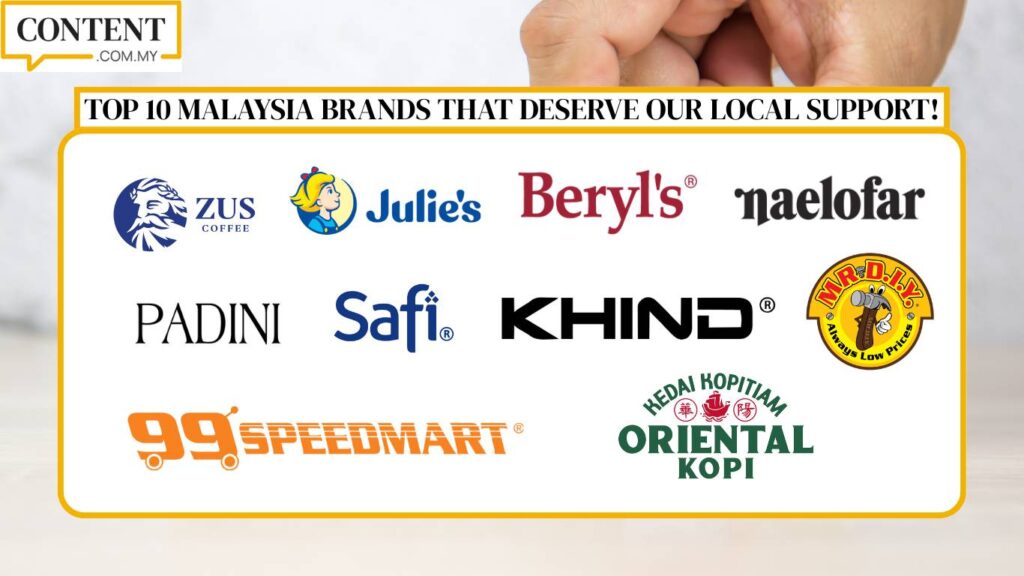
With that in mind, we would like to highlight the 10 Malaysian brands that deserve our support! Some will feel familiar, others may come as a surprise, but each represents a local business that contributes to our nation and ecosystems.
1. ZUS Coffee
ZUS Coffee was founded in 2019 with a straightforward goal: to make good coffee easy to get and reasonably priced for everyday Malaysians.
Built as a digital-first brand, ZUS uses mobile ordering, compact store formats, and streamlined operations to keep things efficient.
If you spend time in shopping malls or office areas, you have probably noticed how easy it is to spot a ZUS outlet nearby with their iconic blue and white hue. That visibility reflects how quickly the brand scaled across urban and suburban areas, before expanding into selected Southeast Asian markets.
Founder: Co-founded by Ian Chua and Venon Tian
Established: 2019
Origins & Growth: Started with a single outlet in Malaysia and grew to hundreds of stores nationwide within a few years, before expanding into selected Southeast Asian markets such as the Philippines, Singapore, and Brunei.
Known For: Coffee beverages, bottled drinks, app-based ordering, and grab-and-go outlets. Its CEO Latte is promoted as the brand’s best-selling drink.
Where You Can Buy: ZUS Coffee outlets nationwide and via its official mobile app.
Why It Stands Out: ZUS Coffee demonstrates how a Malaysian brand can outgrow international chains by designing around local spending habits, convenience, and price sensitivity rather than café luxury.
2. Julie’s
Julie’s started in 1981 as a family-run biscuit maker and gradually became a brand most Malaysians grew up with.
From school snacks to tea-time at home, Julie’s biscuits are familiar because they are consistent, easy to find, and made for everyday sharing.
As the business grew, Julie’s continued manufacturing locally while expanding overseas, turning a household name into one of Malaysia’s better-known FMCG exports without losing its roots.
Founder: Su Chin Hock
Established: 1981 (business origins)
Origins & Growth: Founded in Malaysia and grown into a major FMCG exporter, with products sold in more than 80 countries worldwide.
Known For: Sandwich biscuits, crackers, and family-friendly snack products widely available in supermarkets.
Where You Can Buy: Major supermarkets, convenience stores, and grocery retailers nationwide.
Why It Stands Out: Julie’s shows that Malaysian manufacturing can achieve global reach while remaining accessible and affordable. It’s one of the country’s most enduring consumer brands and a reminder that a biscuit brand born in small-town Malaysia can now sit on shelves across Asia, the Middle East, and beyond.
3. Beryl’s
Beryl’s was established in 1995 with a focus on producing high-quality chocolates locally at prices Malaysians could reasonably afford.
Instead of competing purely on luxury branding, the company invested in local manufacturing and product development to meet both domestic and tourist demand.
Over time, Beryl’s became closely associated with gifting and travel, particularly through its factory outlets and retail presence. Its ability to balance quality, pricing, and local production helped it stand out among imported chocolate brands.
Founder: Leong Chee Yen
Established: 1995
Origins & Growth: Founded in Malaysia with local manufacturing, later expanding distribution to international markets.
Known For: Chocolate bars, pralines, assorted gift boxes, and seasonal chocolate collections.
Where You Can Buy: Beryl’s retail stores, factory outlets, supermarkets, and selected online platforms.
Why It Stands Out: Beryl’s maintains chocolate production in Malaysia while competing with imported brands on quality and presentation, supporting local industry without premium pricing.
4. Naelofar
Naelofar was founded in 2014 as a modest fashion brand that combined contemporary design with strong cultural relevance. The brand gained traction through social media and e-commerce, allowing it to connect directly with younger Malaysian consumers.
This digital-first growth strategy enabled Naelofar to expand regionally while maintaining its design direction and market focus in Malaysia.
Founder: Noor Neelofa Mohd Noor
Established: 2014
Origins & Growth: Started in Malaysia and expanded regionally through online platforms and selected international markets.
Known For: Hijabs, modest apparel, and lifestyle accessories.
Where You Can Buy: Naelofar retail outlets, official website, and authorised online marketplaces.
Why It Stands Out: Naelofar modernised modest fashion by keeping designs contemporary and pricing accessible, proving that Malaysian brands can lead cultural trends without becoming exclusive.
5. Padini
Padini began life in 1971 and grew into one of Malaysia’s most recognisable fashion retailers through tight control over design, sourcing, and retail operations.
By developing multiple in-house brands, Padini built a fashion ecosystem that serves different customer segments under one group, allowing it to compete with industry titans like Uniqlo and H&M.
In fact, many Malaysians may not realise Padini is a local brand, which makes its long-standing presence across malls and shopping centres all the more interesting.
Founder: Yong Pang Chaun
Established: 1971 (as Hwayo Garments Manufacturers Company; Padini brand launched in 1975)
Origins & Growth: Founded in Malaysia and grown into a publicly listed company with extensive nationwide retail presence and regional expansion.
Known For: Casual wear, workwear, and family apparel across multiple in-house brands.
Where You Can Buy: Padini Concept Stores, standalone outlets, shopping malls, and the official online store.
Why It Stands Out: Padini allows consumers to choose a Malaysian fashion brand that delivers consistency, affordability, and scale. It has grown from a small garment manufacturer into a multi-brand fashion group listed on Bursa Malaysia, with stores across Malaysia and in multiple international markets.
6. Safi
Safi was developed to meet growing demand for beauty and personal care products that are halal-certified and suitable for local skin and climate conditions.
Over the years, Safi has become one of Malaysia’s leading halal personal-care brands, with skincare, haircare, and body products formulated for everyday use.
Backed by the Safi Research Institute and Wipro Unza Malaysia, Safi expanded steadily across Malaysia and into regional markets, particularly in Muslim-majority countries, while maintaining its focus on everyday personal care.
Founder: Developed by Safi Research Institute under Wipro Unza Malaysia Sdn Bhd
Established: 1987
Origins & Growth: A Malaysia-born brand that is 100% developed and manufactured in Malaysia, then expanded across Southeast Asia and selected international markets such as Indonesia and the Middle East.
Known For: Skincare, cosmetics, and personal care products with halal certification.
Where You Can Buy: Pharmacies, supermarkets, health and beauty retailers, and official online platforms.
Why It Stands Out: Safi makes halal-certified beauty accessible at everyday price points, combining local research, regulatory compliance, and mass-market availability. Its parent company operates one of the world’s largest halal skincare R&D centres in Subang, with over 100 scientists and significant long-term R&D investment.
7. Khind
Khind began in 1961 as a small electrical repair and trading business and steadily developed into a household appliance brand trusted by Malaysian consumers.
Over time, the company built its reputation around durable designs, functional engineering, and products suited to everyday home use.
Khind’s long-term growth was supported by strong domestic distribution and consistent product performance, which allowed the brand to expand selectively into regional markets while remaining closely associated with Malaysian households.
Founder: Cheng King Fa
Established: 1961
Origins & Growth: Started in Sekinchan, Selangor, and grew from a repair shop into a Malaysian appliance company that now distributes products to over 50 countries.
Known For: Fans, kettles, rice cookers, and small household appliances.
Where You Can Buy: Electrical appliance stores, department stores, supermarkets, and authorised online retailers.
Why It Stands Out: Khind designs appliances around local living conditions and usage needs, making it a dependable Malaysian brand for everyday home essentials. Its journey from a small town in Sekinchan to a global export brand is a classic example of Malaysian SME upscaling done right.
8. MR DIY
MR DIY started in Malaysia as a multi-category household retailer built around convenience and broad product selection. Its store format focuses on everyday items people need regularly, ranging from basic tools to stationery and household accessories.
This high-volume retail model enabled MR DIY to scale rapidly across shopping malls and neighbourhood locations nationwide.
The same operating structure later supported international expansion while keeping headquarters and decision-making based in Malaysia.
Founder: Tan Yu Yeh
Established: 2005
Origins & Growth: Founded in Malaysia and expanded internationally while remaining locally headquartered.
Known For: Home tools, stationery, kitchenware, hardware items, and daily household essentials.
Where You Can Buy: MR DIY stores nationwide and selected official online platforms.
Why It Stands Out: MR DIY turns routine household shopping into sustained support for a Malaysian retail brand through scale, accessibility, and frequency of use.
9. 99 Speedmart
99 Speedmart was founded in 1987 with a focus on neighbourhood-based retail, offering essential groceries and household items in compact store formats. Its emphasis on proximity and consistency allowed the chain to integrate closely into daily Malaysian shopping habits.
By prioritising supply efficiency and standardised store operations, 99 Speedmart expanded steadily across residential areas nationwide, building one of Malaysia’s most extensive convenience retail networks.
Founder: Lee Thiam Wah
Established: 1987
Origins & Growth: Malaysian-founded with thousands of outlets operating across the country.
Known For: Groceries, household items, and daily consumables.
Where You Can Buy: 99 Speedmart outlets nationwide.
Why It Stands Out: 99 Speedmart embeds local retail support into everyday life through widespread neighbourhood access and essential product offerings.
10. Oriental Kopi
Oriental Kopi brings traditional kopitiam flavours into modern dining spaces. Its menu and setting feel familiar, appealing to families, working adults, and casual diners.
Its growth has been driven by steady domestic expansion, with outlets located in high-traffic urban and suburban areas, allowing Oriental Kopi to remain closely connected to everyday dining routines.
Founder: Founded by Dato’ Chan Jian Chern (Calvin Chan) together with Chan Yen Min and Koay Song Leng
Established: 2020
Origins & Growth: Originated in Johor Jaya, Johor, and has expanded rapidly to dozens of cafés across Malaysia and into Singapore in just a few years.
Known For: Kopitiam-style coffee, its award-winning 128-layer egg tarts recognised by the Malaysia Book of Records, pastries, and local meals.
Where You Can Buy: Oriental Kopi outlets across major malls and townships in Malaysia and selected locations in Singapore.
Why It Stands Out: Oriental Kopi sustains local food culture by making traditional café fare part of modern, everyday dining rather than a niche experience. Its rapid growth, from a single Johor café in 2020 to a regional halal kopitiam chain, shows how Malaysian F&B brands can scale quickly while still being rooted in familiar flavours.
How to Verify if a Brand Is Truly Local
For Malaysians who are hunting for local brands to declare your support, you want to go beyond marketing claims or “manufactured in Malaysia”.
Hence, there are ways consumers can verify a brand’s local roots:
- Check the company’s registered headquarters or corporate address, usually listed on the official website
- Look for founder or leadership information that confirms Malaysian ownership or control
- Identify where products are manufactured, assembled, or distributed, not just sold
- Assess whether the brand has a long-term presence in Malaysia, rather than being a short-term market entry
These checks help ensure your spending supports local businesses and ecosystems, not just local branding.
We all Can Agree Local Brands are Memang Best
What we have listed here is only a small slice of Malaysian brands that deserve recognition. In reality, there are many more brands we couldn’t possibly cover, from Marrybrown, Mydin to Perodua, and our personal favorite for a midnight snack, Ramly Burger.
If you care about supporting local brands like we do, one way to do that is by helping their stories reach the right audiences. As a local content marketing agency, we believe Malaysian brands deserve to be seen, understood, and remembered, not just locally, but beyond our borders.
We believe in creating content that not only “wows” Malaysians, but also captures the heart of them. So if you’re ready to make your brand the next Malaysian success story, let’s talk!
Disclaimer: All company names, trademarks, logos, and brand references appearing on this page are the property of their respective owners. Their use is for informational and identification purposes only and does not imply any affiliation, endorsement, sponsorship, or partnership unless explicitly stated.
FAQ About Malaysia Brands
What makes a brand truly Malaysian?
A brand is considered Malaysian if it is founded locally, has Malaysian ownership or decision-making, and operates meaningfully within Malaysia rather than just selling here.
Why do Malaysian brands matter to the local economy?
Local brands support jobs, local suppliers, logistics networks, and long-term business development within Malaysia, helping strengthen the overall economy.
How can I tell if a brand is locally owned?
Check the brand’s official website, company history, founder information, and where key operations or headquarters are based.
Do Malaysian brands compete well with international brands?
Absolutely. Many Malaysian brands now match international competitors in quality, consistency, and scale, especially in food, retail, fashion, and lifestyle categories.
Are Malaysian brands only focused on the local market?
No. Many Malaysian brands have expanded internationally while keeping ownership, operations, or core decision-making rooted in Malaysia.
Is supporting local brands only about patriotism?
Not anymore. For many consumers, it is about choosing brands that offer good value, reliability, and quality while contributing to the local business ecosystem.